
The ruling NDA coalition in India faces a significant challenge in passing the women's reservation bill in Parliament due to insufficient numbers. The bill requires a two-thirds majority in both houses, and the NDA needs to secure additional support or abstentions from other parties to achieve this.

Negating a Supreme Court order, Parliament on Friday passed a bill that maintains the right of those in jail to contest polls, with the government saying the court verdict was wrong and the legislature has constitutional duty to correct it.

The Indian government and opposition are preparing for a contentious Monsoon Session of Parliament, with key issues including the Constitution Amendment Bill on delimitation and women's reservation, the alleged NEET paper leak, and a row over Ram temple donations set to spark heated debates.

The Congress party has criticised the government's recent notification regarding UPI transactions, alleging it paves the way for users to be charged fees, particularly for transactions above Rs 2,000. The party claims the government lacks transparency and questions if the move is to benefit American firms. The government, however, states that charges are necessary for the system's sustainability and infrastructure upgrades, with the Finance Minister clarifying that Merchant Discount Rate (MDR) applies to merchants, not customers.

Parliament has passed a bill to extend the tenure of the director of the Central Bureau of Investigation (CBI) to a maximum of five years from the present two years.

The bill rules out any provision for anticipatory bail for a person accused of atrocities against SC/STs, notwithstanding any court order.

Congress leader Rahul Gandhi has accused the Modi government of quietly paving the way for imposing fees on UPI transactions, alleging it's a surrender to American pressure. The government's recent notification exempts charges only up to Rs 2,000, sparking concerns that higher value transactions and eventually all UPI payments could incur fees. Finance Minister Nirmala Sitharaman, however, clarified that Merchant Discount Rate (MDR) applies to merchants, not customers, and supports digital infrastructure.

Minister of State for Home Nityanand Rai said the legislation was not against any NGO and is an effort to maintain transparency. This amendment is in the interest of good NGOs which want to do good work in the country.

The Indian Parliament has passed a bill amending the Transgender Persons (Protection of Rights) Act 2019, focusing on biological discrimination and excluding social orientations from its scope. The bill aims to provide legal recognition and protection to transgender individuals facing discrimination due to biological issues, while also introducing graded punishments for harm inflicted on them.

The DMK has announced it will meticulously examine the proposed delimitation Bill when it is introduced in Parliament, making a decision based on its merits to safeguard Tamil Nadu's interests. The party's stance will be independent, without consultation with the Congress party, despite their former alliance.
The Navy (Amendment) Bill, 1997, which was earlier passed by the Rajya Sabha, was tabled in the Lok Sabha by Defence Minister Pranab Mukherjee and passed by a voice vote after a short discussion.

Both Houses of Parliament were adjourned sine die, concluding a Budget session marked by the passage of key legislations and the defeat of a Constitution amendment bill on women's reservation. The session saw frequent opposition protests and discussions on various issues, including the West Asia conflict.

The BJP accused Congress leader Sonia Gandhi of objecting to the full version of Vande Mataram at an Independence Day event, sparking a political row. The Congress denied the charge, stating Gandhi was only seeking a chair for party chief Mallikarjun Kharge and clarified the historical context of the song's usage.

'This government is in the very bad habit of doing so again and again. It has done so many times.'

Uttar Pradesh assembly Speaker Satish Mahana has found himself at the centre of a controversy after he was seen walking away while the national anthem was played at an event in Unnao, drawing flak from the opposition. Mahana, however, claimed that the anthem was not played where he was given the guard of honour.
The Parliament on Thursday passed the anti-rape bill providing natural life term or even death for repeat offenders of rape, with Union Home Minister Sushilkumar Shinde stating the "law will impact the society for years to come".

The Aadhaar and Other Laws (Amendment) Bill, 2019 was passed in Rajya Sabha by a voice vote, although many parties including the Trinamool Congress and Dravida Munnetra Kazagham opposed it citing various reasons, including apprehensions data theft.

The Payments Council of India has confirmed that Unified Payments Interface (UPI) services will continue to be free for consumers and small merchants, despite a recent Lok Sabha Bill. This clarification addresses concerns about potential charges, emphasising that while a sustainable financial model for UPI infrastructure is being developed, transaction charges will not be passed on to users or small businesses.

Successors of those who migrated to Pakistan and China during Partition will have no claim over the properties left behind in India, with Parliament on Tuesday passing a bill to amend a 49-year-old law.

Congress-ruled states, including Karnataka, Kerala, and Telangana, are preparing to challenge the Mines and Minerals (Development and Regulation) Amendment Act, 2026, in the Supreme Court. They allege the new law undermines states' rights by restricting their powers to levy taxes on mineral resources, a claim the Centre denies, stating it aims for uniform mineral rates.

Parliament on Tuesday passed a landmark education bill that gives children, including the disabled, the fundamental right to free and compulsory education.

The Indian government has clarified that consumers will not be charged for UPI transactions, and most merchant transactions will also remain free. This comes amidst speculation following an amendment to the Payment and Settlement Systems Act, 2007. Any future merchant discount rate (MDR) would be nominal, threshold-based, and aimed at ensuring UPI's long-term sustainability and infrastructure development.
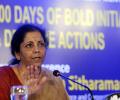
A high-level committee, including representatives from banks and payment associations, is set to decide on Merchant Discount Rate (MDR) for UPI transactions exceeding Rs 2,000 to merchants. While person-to-person and person-to-merchant transactions up to Rs 2,000 remain free, the move follows a recent amendment to the Payment and Settlement Systems Act, sparking debate and clarification from the Finance Minister that only certain high-value merchant transactions might incur charges.
The Rajya Sabha has passed The Bankers' Books Evidence Bill, 2026, which aims to replace a British-era law and allow digital and virtual records to be admissible as evidence in courts. This legislation aligns with contemporary digital banking practices and extends a uniform evidential framework to various financial entities, including NBFCs and fintech companies. Finance Minister Nirmala Sitharaman highlighted the bill's role in strengthening public confidence and safeguarding customer privacy. The bill's passage, however, saw an Opposition walkout over unrelated issues.

'You cannot run Parliament with 800 MPs as nobody will get time (to speak in Parliament). And Parliament sits for barely 60 days in a year.' 'Look at the House of Commons of the United Kingdom. They have 650 MPs and they sit for 150 days on an average in a year.'

Prime Minister Narendra Modi has called upon citizens to celebrate Independence Day with honour and pride, urging them to take a pledge for a developed India. This appeal comes amidst parliamentary sessions marked by protests from both ruling and opposition alliances.

Prime Minister Narendra Modi has appealed to opposition parties to support the delimitation-linked Women's Reservation Bill, highlighting its 40-year struggle. The bill aims to provide 33 per cent reservation for women in legislatures and increase Lok Sabha seats, requiring a two-thirds majority for passage. Despite previous setbacks and ongoing efforts to secure numbers, the government continues to push for this crucial legislation.
The Indian government has mandated that banks and payment providers cannot levy charges on UPI transactions up to Rs 2,000 or on payments made via RuPay debit cards. This directive follows an amendment to the Payment and Settlement Systems Act, 2007, aiming to sustain and expand the digital payments ecosystem.
The Parliament on Tuesday passed the much talked about Bill to hike the salaries of Members of Parliament by over three times from Rs 16,000 to Rs 50,000 and doubling two of their key allowances to Rs 40,000 each, with the Rajya Sabha approving the measure. The Salary, Allowance and Pension of Members of Parliament (Amendment) Bill, 2010, has already been passed by the Lok Sabha.

Prime Minister Narendra Modi held a breakfast meeting with 37 BJP MPs, including recent AAP defectors, where he emphasised the importance of smooth parliamentary proceedings. He also advised MPs on taking their roles seriously, utilising the Parliament library, engaging with youth, and effectively implementing MPLADS.

Senior Congress leader Shashi Tharoor has criticised the Centre's new mandate requiring the full rendition of the National Song, Vande Mataram, alongside the National Anthem at official functions. Tharoor argues that the extended duration could lead to a decrease in respect rather than an increase, citing practical considerations for audiences. The amendment bill, which grants Vande Mataram equal statutory penal protection as the National Anthem, recently received presidential assent.
Parliament Tuesday approved the Companies (Amendment) Bill, 2002 with Rajya Sabha returning it after Finance Minister Jaswant Singh assured that a comprehensive legislation on the subject would be introduced in the budget session of the Parliament.
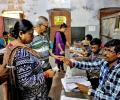
A joint parliamentary committee tasked with examining the 'One Nation One Election' bill has been granted an extension until the end of the Winter session to submit its report. The 41-member committee is reviewing the Constitution (One Hundred and Twenty-Ninth Amendment) Bill, 2024, and is conducting nationwide consultations on implementing simultaneous elections for Lok Sabha, state assemblies, and local bodies by 2029.

The Tamil Nadu Assembly has adopted a resolution, moved by Chief Minister C Joseph Vijay, urging the Union government to permanently fix the Lok Sabha strength at 543 and implement 33 per cent women's reservation by 2029. The resolution also opposes delimitation that could disadvantage states successful in population control.

The Indian government has introduced a 0.4% Merchant Discount Rate (MDR) on UPI person-to-merchant (P2M) transactions exceeding Rs 2,000, effective October 15. This move ends nearly six years of fully free UPI payments, though person-to-person (P2P) transfers and small P2M payments remain free. The charges aim to bolster investment in UPI infrastructure, with specific exemptions and caps for essential sectors.

With the three-day special sitting of Parliament on the constitution amendment bill related to the implementation of 33 percent reservation for women from the 2029 Lok Sabha polls set to begin on Thursday, a meeting of opposition parties is slated to be held on Wednesday at the residence of Congress president Mallikarjun Kharge.

The Indian government has confirmed its readiness for a Lok Sabha debate on the ongoing student protests and police action, with Union Home Minister Amit Shah set to address the concerns, particularly those related to the NEET paper leak issue.

The Lok Sabha secretariat has requested a response from Leader of Opposition Rahul Gandhi regarding two privilege complaints filed by BJP MPs Anurag Thakur and Sanjay Jaiswal. The complaints stem from Gandhi's remarks against Home Minister Amit Shah during a debate on the anti-paper leak bill, which the BJP MPs deemed "unparliamentary" and a breach of privilege. Gandhi has until August 28 to submit his explanation to the Privileges Committee.

'Some people may not like what I am saying, but shortcomings have to be pointed out. These deficiencies should be rectified within the next three months.' 'This is Gorakhpur, where our CM himself resides. If such shortcomings exist here, then what will happen?'

The DMK has been charting an independent course from the Congress-led Opposition bloc on contentious issues during the Monsoon Session, including not joining a walkout over the anti-paper leak bill and participating in a debate on the National Honour Bill, signalling growing fault lines within the Opposition.
